Precision Diagnostics
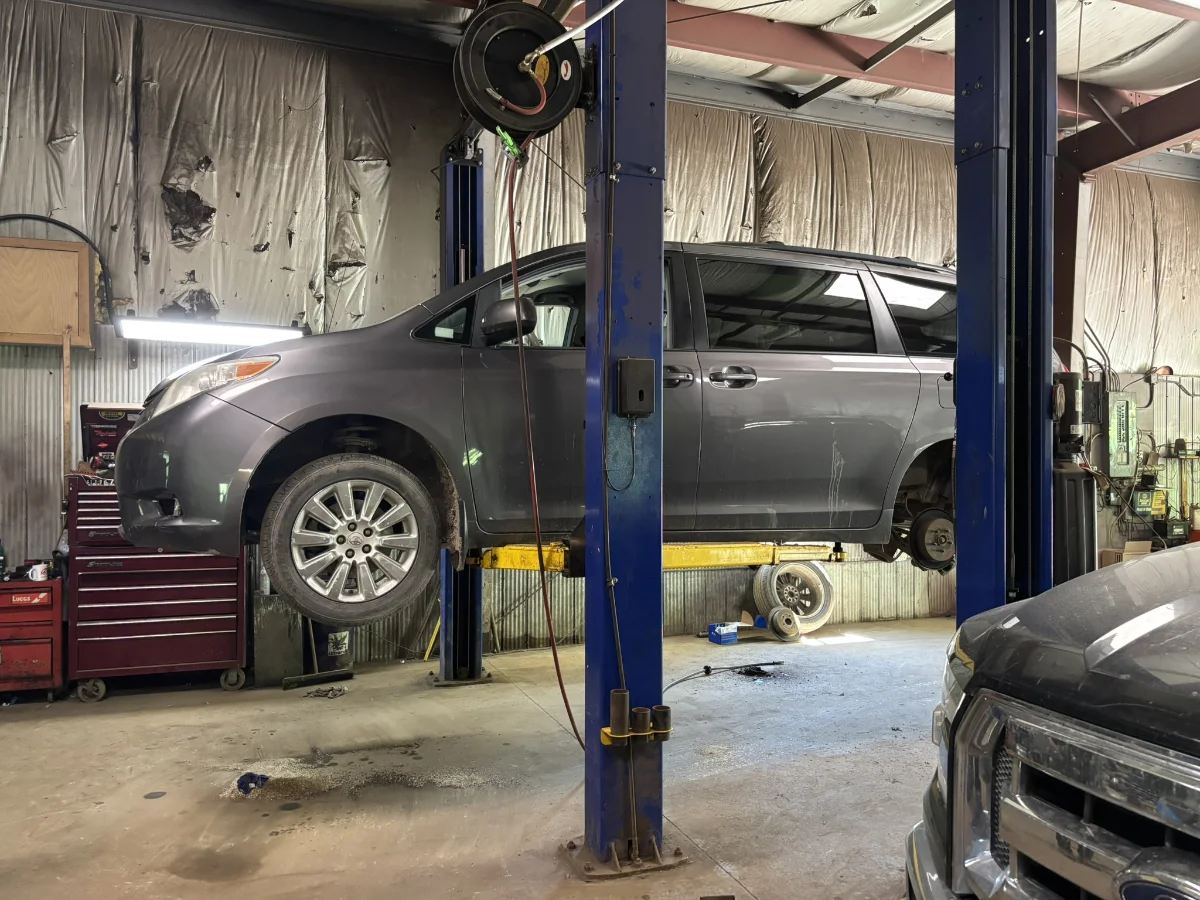
The "Check Engine" light is perhaps the most misunderstood symbol on your dashboard. To some, it’s a source of immediate anxiety; to others, it’s a glowing orange suggestion they’ve been ignoring for three months.
At our garage, we don't view that light as a reason to start guessing. We view it as a lead in a high-stakes investigation. In an era where cars are essentially rolling supercomputers, "Precision Diagnostics" is the difference between fixing the problem and just throwing parts at it.
1. The "Parts Cannon" vs. Root Cause Analysis
Many shops use what we call the "Parts Cannon." If a code says "Oxygen Sensor," they fire a new sensor at the car. If the light stays on, they fire another part. This is an expensive way to troubleshoot, and the customer always picks up the tab.
Precision Diagnostics is about finding the why behind the what. A sensor code doesn't always mean the sensor is bad—it could be a frayed wire, a vacuum leak, or a failing control module. Our goal is to prove a component is faulty before we ever take it out of the box.
2. Our Diagnostic Toolkit
Modern vehicles require more than just a wrench and a gut feeling. We invest in high-end technology to "see" what’s happening inside your engine:
Advanced Scan Tools: These do more than just read codes. They allow us to watch "Live Data"—seeing exactly what the computer sees in real-time, from fuel mixtures to transmission pressures.
Lab Scopes (The Automotive EKG): Sometimes a fault happens in a fraction of a second—too fast for a scan tool to catch. We use oscilloscopes to graph electrical signals. This allows us to see the "heartbeat" of a sensor and catch glitches that would otherwise be invisible.
Pressure Transducers: These allow us to check the internal health of an engine (like timing and valve sealing) without even taking it apart.
3. The Methodical Process
A diagnostic fee isn't just for "plugging in a computer." It covers a rigorous, multi-step process:
Verification: We confirm the symptom. If we can’t see the problem happen, we can’t be sure we’ve fixed it.
Data Analysis: We look at "Freeze Frame" data to see exactly what the car was doing (speed, temperature, RPM) the moment the fault occurred.
Circuit Testing: We test the wiring. A $500 computer is useless if a $0.05 wire is broken.
The "Smoking Gun": We perform pinpoint tests to isolate the specific failure point.
4. Why Accuracy Saves You Money
It might seem counterintuitive, but paying for professional diagnostic time actually lowers your repair bill. When we pinpoint the root cause accurately the first time:
You don't pay for parts you didn't need.
Your car spends less time on the lift.
The problem doesn't come back a week later.
Precision isn't just a buzzword—it's our standard. If your car is acting up or that light is staring you down, let’s find the truth together.
Is your vehicle trying to tell you something? Don't let a small glitch turn into a major breakdown.
Need a hand with this?
Book Appointment